Yes - Maui Truly Has THE BEST Diving Locations
The islands of Maui County (Lanai, Maui, Molokai) offer many incredible dive locations and is what gives Maui the reputation of "best diving in the world". Our site has gathered information from multiple dive masters in Maui to bring you the best information on dive spots.
The Best East Lanai Dive Sites
Turtle Haven
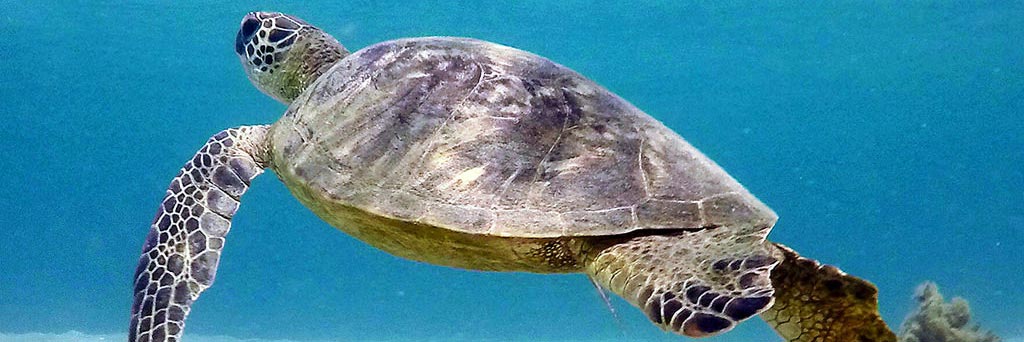
Turtle Haven is nestled into the north east end of east Lanai. Diving on the reef here is like walking in a coral garden. And "Coral Garden" is the alternate name when the turtles hide. But Green Sea Turtles are almost always to be found here. As many as 16 within 100 yards of each other, socializing and having their shells cleaned at the "cleaning station". Turtles have a definite dominance hierarchy and seem to take position on the reef accordingly. Some are curious, some friendly and others what I could only characterize as horny as they try and mount the anchor that rests in the sand. While some may say that this behavior may be just "hardwired" and instinctive, I believe that like any other higher intelligence they have personalities which vary from turtle to turtle. Turtles have long been thought of by many cultures as symbols of wisdom. Turtles have recently been making a comeback in their population in Hawaii but many have been afflicted with tumors on Maui's coast line. Lanai turtles are still free of this disease and this may be due to the very reduced amount of stressors (like pollution and pesticides and people that they have on Lanai. Turtles can live over 100 years and do not even reach maturity sexually until their late 20's or early 30's. Though seen often their antics are never tiring.
The Best SouthEast Lanai Dive Sites
Oscar's Reef
Oscar's Reef is almost around the point at Kamaiki and so is exposed to strong currents quite often, making it one of the more difficult spots to access frequently however, when it can be done it rivals all the other sites on the South east corner because of the beauty of the coral, the swim-through, the presence of many species of fish both common and rare (like the flame angel) and a turtle cleaning station. While the presence of turtle cleaning stations is a well known phenomena to Hawaiian dive guides it is not well documented in the mainstream nature publications and most divers tend to move to fast to see this unusual behavior which, as far as I know is limited to Hawaii. I have yet to hear of turtles congregating to get their shells picked clean by grazing tang fish elsewhere on the globe, but this could be a well kept secret. The cleaning action is best observed by swimming quietly and slowly up to visual range and watching the turtles hover with their necks craning and fins in a vertically held position. If you are fortunate you will see cleaning occur. You may also see turtles feeding on vegetation or small crustaceans while here. When the turtles are not found here the abundance of fish and variety of inverts found in the ledges make this a great dive. This site was named by a former dive leader Robin Simon who had a special relationship with a turtle he called Oscar that was resident here for years.
Sergeant Minor
This is a continuation of Sergeant Major. A large sandy area separates the two dive sights. Sergeant Minors' claim to fame is the 50 foot lava tube. It usually has a large eel slinking around somewhere inside. Not to worry though, the eel is very accommodating even when you come face to face with him! If you get the chance to take a close look at a large eel be sure to check for a cleaner shrimp which may be present on or around his face. These cleaner shrimp are known for their bravery and their ability to clean a multitude of teeth is a very short period of time. Both, Sergeant Major and Sergeant Minor face the open ocean so be sure to keep your eyes open to the deeper water. Larger game fish, dolphins and during certain times of the year humpback whales have been seen cruising the area.
Sergeant Major
This is a great dive sight for those who like to poke around, look in every hole and under every ledge. There is a ton of marine life on this dive sight as well as interesting formations. This sight offers the usual tropical views with the added bonus of turtles and the occasional white tip reef shark. We have also spotted a large eel here. Sergeant Major has a depth range of 50 to 25 feet and is usually done as a second dive. It has three ridges running seaward with a beautiful archway connecting two of the ridges. It is in this area that we sometimes see the white tip reef shark.
Arm Chair
Popular and populated with fish, divers, snorkelers and sometimes dolphins. The coastline is marked by the appearances of two lava benches that extend just far enough out to bring to mind a giant Armchair for a resting Neptune perhaps. The foci of this site are two large pinnacles that almost reach the surface. The majority of the fish congregate around here as do the snorkelers which tend to arrive by raft throughout the morning, stopping for about 20 minutes before they are off again on their respective boat rides for the day. If Lanai had coastal roads this would be the Hanauma Bay of Lanai. But the great thing is that almost all of Lanai is remote except by boat and this spot is no exception. The fish will follow you around here and create great photographic backdrops as does the pinnacle which hosts a range of life from schooling black durgeons and other milling tropicals to the quieter types like scorpion fish and octopus. It is also a great invertebrate spot too. As you kick around here look seaward often for this is where the dolphins rest on windy days, there are two turtles that live here and the eagle rays often fly in formation at the edge of the reef. The profile is generally 50' for up to an hour with a nice safety finish on the top of the pinnacle. Definite camera friendly dive.
The Best South Lanai Sites
1st Cathedral
1st Cathedral is an amazing dive site. A large lave tube approx. 100 feet long and two stories tall. The majesty of this dive site is only compromised by too many other divers preceding you into the cavern, due to the amount of silt they can kick up while they are inside. As you enter the cathedral take a moment to experience the atmosphere. Looking towards the back wall of the cathedral you will see what looks like a stained glass window. The effect is produced by the light being reflected off the crystal clear blue water. Just in front of the "window" is a large boulder. During certain times of the year light filters through the ceiling of the cathedral illuminating the rock giving it the feeling of an old style catholic church. So if you've missed church while you've been on vacation, this dive site has you covered. Once your prayers are said be sure to look into the nooks and crannies for sponge crabs, lobsters, nudibrachs, big eye squirrel fish and the occasional white tip reef shark and frogfish. The outside of the cathedral has a lot to offer in the way of marine life, so be sure to keep your eyes open and your camera ready. The dive is generally done as a 65 foot dive for 35 minutes, although most of the dive takes place in 55 feet of water. This dive is also home to "The Alien". A giant moray who holds the world heavyweight title for eels
2nd Cathedral Dive
Named after first cathedral only because of it's size. 2nd Cathedral is the larger of the two cathedral dives. This sight has two main chambers with a break in the middle with two huge arch ways. There are several entries into this lave tube. Depending on the conditions for the day you may drop through the ceiling of the main chamber or you may shoot through the dark hole. Which ever way you enter be sure to take your time on the inside. There are several varieties of rare coral growing inside, as well as interesting marine life. Be sure to check out the ceiling of this cavern there are wondrous things to be seen. Large eels are common at this site. There is a very large and friendly trumpet fish at this dive site who does not mind coming face to face with you. This dive site is best done as a 70 foot dive for 35 minutes, although there are areas that can get deeper on the outside of the cavern, so watch your depth.
Fish Rock
A dive sight with every fish on the fish card and then some. Fish Rock is one of the dive sights on the south side of Lanai that has beautiful fish and beautiful coral. You can see everything from the Ornate Butterfly to the Moorish Idol to the Bandit angel to the Pyramid Butterfly. Fish Rock is a pinnacle which has a depth range of 75 feet at its deepest to the surface, which makes it an excellent dive and snorkel spot. Because it is situated near the entrance to Manele Bay Harbor there is a good chance of seeing dolphins at this sight.
Wash Rock
Wash Rock Lanai is known for its geological formations and this sight features some of Lanai's best. This underwater area is huge and has variety not known at many dive sites. There are so many interesting sections of this dive site. The Rock comes to within four feet of the surface of the water. There are beautiful coral formations on the top of this rock which host a tremendous amount of tropicals. Along the edges and base of this rock you will find a myriad of marine life, from branch coral to schools of pyramid butterfly fish to the elusive and rare pipe fish. Another aspect of this dive site is call the Tunnel of Love. This is a short more narrow lava tube with space for three or four divers to look around in together. Inside this tube we usually see a mated pair of ghost shrimp, a pair of yellow margin moray eels as well as lobsters and crabs. Beyond this area is another lava tube called Hungry Shark Reef. So named because a skinny white tip reef shark was frequently found to live here. In this lava tube we also see crabs, lobsters and a large yellow margin moray.
Knob Hill
This dive site is packed with amazing wild life. Here is a good balance of formations and lava structure type diving with an abundance of marine life. The site is named after a pinnacle which has a "knob" perched on top of it. This knob is supported by three legs making room for cup corals galore. When these corals are open and feeding there is an amazing display of vibrant orange. As you move away from the knob and into 50-60 feet of water there is a huge coral head, the last remaining of three, full of damsel fish. If you watch closely you will see the damsels swimming above the coral head, but as you approach they will move closer into the coral to protect their home. If you listen carefully you may be able to hear their characteristic chirping. If you have ever had an encounter with these Chihuahua of the seas, you probably feel the same way I do, you're glad that they don't grow to be more than a couple of inches. As you move away from the coral head there will be ledges and archways full of taapa and the occasional white tip reef shark. We frequently see octopus and free swimming eels at this dive site. This is a great site for cruising around and looking into cracks and crevices. Go slow and see what this site has to offer.
Pyramids
Pyramids, named for the great number of pyramid butterflies schooling at the top of the pinnacles, offers some of Lanai's best diving. From lava arches and pinnacles to expanses of finger corals and reef fish, Pyramids is a diver's playground. With depths ranging from 40 to 80 feet, we plan the profile as 70 feet for 35 minutes for the most bottom time and best views. The mooring is located in 50 feet of water at the first lava archway. A short swim takes us to a large hollow lava pinnacle. Holes in the sides of the pinnacle gives us windows to the high concentration of marine life living within. Schools of Taape (blue striped snapper) swim among the soft snowflake and black corals. Lobster and cleaner shrimp hide behind swarms of night feeding Menpachi (Squirrelfish) that are so thick that a dive light is needed to part the fish. Several eels also make their home here. Two sizable yellow margin moray eels can usually be found and often the less social Viper moray. Shy Pipefish hide in small cracks and the lucky diver can view a sleeping whitetip reef shark. Leaving the pinnacle, we arrive at the lava arches. These swim-throughs offer more soft snowflake and sinularia corals as well as schools of Taape. Many lobster, crabs, and often large cowrie shells can be found in the archways. Throughout the dive site, the solitary species of Great Barracuda can be spotted. Even the sand channels offer Helmet shells, flounder, and the sand diving Peacock razor wrasse. Whether it be the variety of marine life, the clear water, or the lava formations, Pyramids is a favorite dive site of the crew and passengers alike.
Monolith
This massive slab of stone sits off shore surrounded by sand on three sides and a short run of coral and lava on the deep side. The level topside lies submerged in 38' while the foot of the monolith sits in 90' feet. This site hosts many rate and unusual species from long nose hawk fish, lion fish to basselets and garden eels on the far reaches at 130'. A favorite resident is "Stretch," a long lived yellow margin moray. Tamed through hand feeding in the early 80's. He has not been getting handouts for at least a dozen years, yet he still swims up to inquire to divers. Wonderful photo opportunity. The depth and off shore proximity make this a good site to see sting rays and other large game fish. This deep dive is best done on a computer for maximum bottom time.
Secret Cove
For those of you who like to explore cracks and crevices, swim through large tunnels, glide through archways, wrestle with lobster and see the strange and unusual, this is the site for you. This is a great site for the poke along diver. The slower you go on this dive site, the more you see. The big attraction on this site is a large lave tube that is about 60 feet long (the length of the tube will vary depending on the dive guide's imagination). This lava tube is the home of several different varieties of lobsters, from the spiny to the Hawaiian to the rare long armed lobster. There is usually at least one large eel and sometimes two. Look closely on your trip through this tunnel and you may see nudibranchs attached to the walls and ceilings. This tunnel gives even the advanced diver a thrill. Why you may ask? Good question. When entering the tunnel you enter a totally darken area with only your light to guide you. I can already hear those of you who don't like the dark but don't be dissuaded. As you move a body's length into the tunnel the light at the end is visible. The tunnel dog leg's to the left causing this brief blackout. In the shallower areas of this sight is a number of swim-throughs, teaming with taapa and other schooling fish. You may even see the remains (you have to use your imagination) of a boat that was sunk during the filming of a Charlie's Angles episode. There is a full wall of a rare soft coral in this area, ask your guide to point it out. This is a very interesting dive site with lots to do and see. Generally this is a 50 foot dive for 40 minutes, and can be done as either a first or second dive.
No Name/Paradise
This is a ace in the hole, for days when the current is chasing you around Lanai. This is actually two dive sites or one huge one. One half of the dive takes place around a pinnacle with two swim-throughs (good photo opportunities) and an abundance of marine life. Take a few moments to look out and around during this dive. The schools of fish will be over your head here. Keep an eye out for a turtle on the pinnacle side of this dive site. He doesn't usually announce his arrival, unfortunately. At this point your dive guide may cross the sand to the next dive area (Paradise) or he/she may return to the boat by circumnavigating the pinnacle. The paradise side of the dive site is an underwater continuation of the shoreline, ending in a wide swim through that looks like an underwater cave with stalactites hanging from the ceiling. Be watchful of your depth at this point in the dive. You can easily dip to over 90 feet here, dropping into a dive site we call the Drop Off. As you swim along the wall here keep your eyes peeled for wire coral with resident gobies, frog fish and snow flake coral. As you make your way along the wall towards shore, be sure to look up and watch the surge roll over the rocks overhead. It looks like a storm front moving in. As you leave the wall and head back towards the boat, keep a look out for those masters of camouflage, the octopus. They seem to like to hang out in the rubbley area between the two dive sites. This site can be done as a first or second dive, with depth ranging from 60 to 80 feet.
The Best Southwest Lanai Dive Sites
Light House
This is a great follow up to Shark Fin. This site is an area full of large boulders and large animals. This site is known for an area called Volkswagen cave. This cave, and it is a cave, (we generally will not take divers into the cave) is the home of several great white tip reef sharks. Usually the dive guide will go into the cave and encourage the sharks to come out to the divers. There are other ledges in this area where the white tips just hang out. We have seen a pregnant female white tip here as well as remnants of what looked to be the male sharks claspers. Even if the sharks are not home, which is always a possibility, there are tons of things to see and this dive site like Shark Fin sits at the edge of open ocean. Keep your eyes peeled for large animals here too! This is an area know for swift current at it's outer most edge and larger varieties of sharks prefer this type of environment, although I have never seen a large aggressive shark here, there have been sightings of whale sharks here, so definitely keep your head up! This dive is usually done as a 60-65' dive
Shark Fin
This is one of the best dive sites on the back side of Lanai. You will recognize it as soon as you see it because it is named after the pinnacle that sticks out of the water that looks amazingly like, you guessed it, a shark's fin. This is the wall dive for people who like the thought of wall diving but are not necessarily comfortable with hanging out over the abyss. There are astonishing amounts of pendant fish which school and glide with the swell. It is not unusual to have myriad's of pyramid butterflies dancing before you as you round the corner of the pinnacle. Another major attraction of this dive site is an area we call "Rare Fish Rock. Here you can spot a large harem of bicolor anthias, chevron tangs and the rarest of all a tinkers butterfly. These are particularly rare because they are found in deep water and this one has taken up residence in about 65 feet of water. Be sure to take a look at a fish book before doing this dive so that you can recognize the rare types of fish you will be seeing, otherwise they all start to look the same. This dive site sits on the edge of open water so keep your eyes peeled for a look at large pelagic cruisers. This dive is usually done as a first dive with a max. depth of 80 feet.
The Best Molokai Dive Sites
Molokai
Our once in a blue moon dive destination. Molokai is the island northeast of Maui. The channel between Maui and Molokai is totally unprotected from the winds, thereby making it a rare dive site. These are pristine dive sites with little or no diver traffic through the year. If you happen to be on the boat a day that we go to Molokai consider yourself one of the chosen divers.
Moku Ho'oniki Rock
There are several dive sites surrounding this LARGE rock that sits off the coast of Molokai. All of the sites surrounding this rock are subject to strong currents and wide open spaces, making it the perfect place for large pelagics. Pay attention to the blue water when diving here. You can see Whales, Whalesharks, Sharks and Manta Rays. These rare animals are quite stealthy and rarely cruise right up and tap you on the shoulder.
Fish Rain
This is usually done as a drift dive. Current can be very strong here, so listen carefully to the instructions given by the guide or the captain. This dive is an experience in the abundant. Fish of all types congregate here in large numbers. As you move along the slope of the wall, look over your head and you will experience the name of the dive site. Fish will be raining down on you. As you glide around the corner, keep a watch for those large visitors. Our last sighting of a whale shark was on this site. We have seen hammerhead and tiger sharks here and the rarest of all - a playful monk seal. Monk seals are on the endangered species list and a sighting of one is very rare. We not only looked at this guy, he hung around long enough for the guide to take several great photos of him. Even without the unusual, the site is a great dive. Lots to look at with the knowledge that not many others have seen what you are seeing. This is generally done as a first dive with a depth between 80 and 100 feet.
Hole in the Wall
This dive sight is a huge pinnacle. It ranges in depth from 40 feet on the top of the pinnacle to 100 feet at the base. There are several great areas on this pinnacle. On the top are large numbers of schooling butterfly fish, moray eels and rare corals. As you glide off the side and start your way around the pinnacle watch for the black coral tree growing on the side. Look very closely on the black coral tree for the rare long nose hawk fish. Also found in this area is another rare fish, the Tinker's butterfly. Take a look in the fish book before going on this dive to aquatint yourself with these two rare guys. As you continue around the site look out into the sand and see the biggest rocket I've ever seen. It's partly buried in the sand in 100 feet of water. There are smaller missiles around this dive site, another photo opportunity. As you continue your cruise around the pinnacle watch for snow flake coral and wire corals. There are also some large antler corals in this area. Keep your eyes open for the pteraeolidia, yeah right, or what I like to call the purple caterpillar. They are very cool and have an interesting defense mechanism.
Fish Bowl
This is an anchored dive. Don't be disappointed when you first start down the anchor line. It is a little barren to begin with, which makes it a good anchorage. As we cruise away from the boat you will begin to see the marine life pick up. Generally I like to cruise the bowl back towards Maui and look out over the edge where huge boulders are covered with coral and fish and octopus. Lots of nudibranchs too. As we drop down the side to about 55 feet we stop to look under the ledges here and sometimes see a white tip reef shark. At this point we generally get a slight ride on the current around the corner and back into the fish bowl. As you take this ride, keep your eyes out into the sand for cruising bruisers (Hammerheads!) and eagle rays. You just never know when they are going to show up.
The Best Maui Dive Sites
Pipeline
A beautiful day in the neighborhood. Some times it is difficult to convince divers that this is a worthwhile dive because of it's location. It is only five minutes from the dock. Divers seem to think that if it doesn't take 30 minutes to get there, it isn't worth diving. Not true. Distance from the dock has nothing to due with the beauty of the dive. This area is full of fish and turtles with a beautiful expanse of reef. The pipeline is a long abandoned drainage pipe. It lays out in the middle of the sand and is now covered with coral. (It is amazing what mother nature will claim as her own.) Under the pipe we can sometimes see turtles sleeping. Although the turtles do not seem to congregate in any particular area, we do usually see them on each dive here. We have on occasion seen the very rare hawksbill turtle on this site. The hawksbill turtle is one of the most endangered turtles. Reef fish are in abundance here. You can see every fish on the fish card, plus a few. It is a great spot for snorklers as well as divers. Usually a nice easy dive with clear water and little concern for current. The depth can get out to 50 feet, but for the best viewing of marine life stay in the 30-40 foot range.
Black Rock
This is a photographer's dream. Here the fish are posing pros. They have no fear of photographers or divers, sometimes making themselves a nuisances by being too close to your camera. They are constantly looking for hand outs, but we advise against fish feeding. As a result of the large number of divers and snorklers that visit this place everyday and offer hand outs, the fish have lost their natural fear of people which make them not only easy photo subjects, but also easy spearing subjects. Kids with spear guns, needing some target practice, sometimes use the fish at Black Rock as easy targets. It is not unusual to see fish with scales and flesh missing. Another result of fish feeding is aggressive fish. I have seen puffer fish and eels grab the fish food right out of divers hands. Beside friendly fish, this dive site has an amazing number of resident turtles. They seem to have retained their wariness of people, but they generally let you get close enough to take awesome photos but not close enough to touch. Not only is this a good day dive, it is a great night dive. This area comes alive at night with tons of nocturnal things to see. The area teams with free swimming eels, nudibranchs, lobsters and crabs. I see things on this dive site at night that I have never seen anywhere else. You can see at least three or four types of eels at night here and if you are lucky you can actually see them catching their dinner. You can see my favorite nudibranch, the Spanish Dancer as well as a variety of flat worms. I have seen the rare Harlequin shrimp, turkey fish, lion fish and many other rare and weird things. This dive has a maximum depth of 35 feet which makes for nice long bottom times.
Airport Beach
This is a great beach dive. A good warm up dive for those who have been out of the water for awhile or a nice cruise dive to end your diving vacation. The reef is shallow and ends in about 40 feet of water. There is a terrific variety of marine life here from turtles to tropicals to the rare marine life. I have seen flying gunards to the critically endangered hawks bill turtle on this site. The entry and exit can be a little tricky if you are unaware of the slope of the beach. The best way to enter is to walk into the water with your BCD inflated, mask on and regulator in. Hold on to your fins and walk into the water. There is a dip in the slope of the sand and this is where you want to stop and put your fins on. Once they are on, kick yourself out over the reef. The marine life show starts almost immediately. This is a favorite place for scuba classes, so watch some of the other divers enter the water if you are unsure. Better yet, let one of us take you out the first time. This is a good place for snorkelers too. The facilities are beautiful with a grass park, bathrooms, a shower and covered picnic areas. There is a massive expanse of reef system here. It runs for about 3 miles. Please stay off of it. Good buoyancy control is a must on this dive.
Slaughter House
This dive site is a beautiful boat dive and a beautiful but challenging beach dive. Maui Land and Pine has tried to discourage divers from accessing this dive from the beach by putting a fence up. The only way to the dive site now, is the long way. It is ok for snorkerlers, but SCUBA gear gets a bit weighty for such a long steep walk. This dive site is part of the Honolua Marine Perserve. Nothing can be taken from this site.
This dive site offers a rare combination of lava formations and marine life that is usually only seen on Lanai. There is a swim thru with lobsters, who seem to know that they are in a marine perserve. For some reason we seem to see more unusual marine life behavior here than at other sites. This dive is usually done as a second dive with a maximum depth of about 50 feet. Keep your eyes open for dolphin at this site. This bay and Honolua Bay, just around the cornor, seem to the resting place for the Maui pod of Spinner Dolphins.
Honolua Bay
This is a special treat as a boat dive. The bay has a fresh water stream that feeds into it during the rainy season. This has caused the reef that is close to shore to be smoothered by slit and fresh water debris. Once off shore about 300 yards the reef begins to recover. There is wonderful reef on both sides of the bay, just pick the clearest side. The reef probably begins a little sooner on the north side of the bay because that fresh water stream feeds in on the south side. The north side has turtles and is a favorite place for snorkel boats to come to. The bay is protected from the winds that some times kick up during the day. There is a massive amount of coral here. There is a jeep in shallow water, that must have gone off the cliffs years ago. A sad site to see on this side of the bay is snorklers standing on the reef. If you look, a major portion of the shallow reef is dead because snorkelers feel the need to stand up and walk around in the shallows. The fish are friendly on this side due to the number of snorkel boats who allow fish feeding. The south side of bay is a little further out. Because of that it doesn't draw the snorkelers to it. Divers doing this as a beach dive also have a longer surface swim. I do not recommend dropping in on this site until you find the reef. There is nothing in the center of the bay except sand and silt and getting disorientated is a definite possibility. The south side has a turtle population that seems to like to sleep, tucked in the niches in the sloping sides of the coral. There is some wonderful areas to explore and there is a canyon area that usually marks my turnaround point. It almost looks like a valley with stairs towards the back. I usually run the dive in a triangle shape bringing the divers back over the top of the coral and swimming thru some of the cracks and crevices. Keep your eyes open for those dolphin that I talked about before and anything else that might be cruising in deeper water. Usually a 45 foot dive with unlimited bottom time.